
Excavation
Plumbing excavation across Northern Utah, run by our own dig crew. Trenchless first whenever the line allows. Booked visits run on a 3-hour window.
Schedule ServiceExcavation
Nobody wants a trench across the front yard. But some pipe cannot be repaired from the inside, and when that is the situation, the honest answer is to dig. We are not going to sell you a lining job on a line that has collapsed. From June 2025 through July 2026 our crews ran 39 excavation jobs across Northern Utah. We have our own dig division, which means the excavation is not subcontracted to a company you have never met.
- Excavation work we actually did this past year
- Trenchless first, when trenchless actually fits
- What we excavate for
- Digging in Utah is its own problem
- What to expect, including the ugly parts
Excavation work we actually did this past year
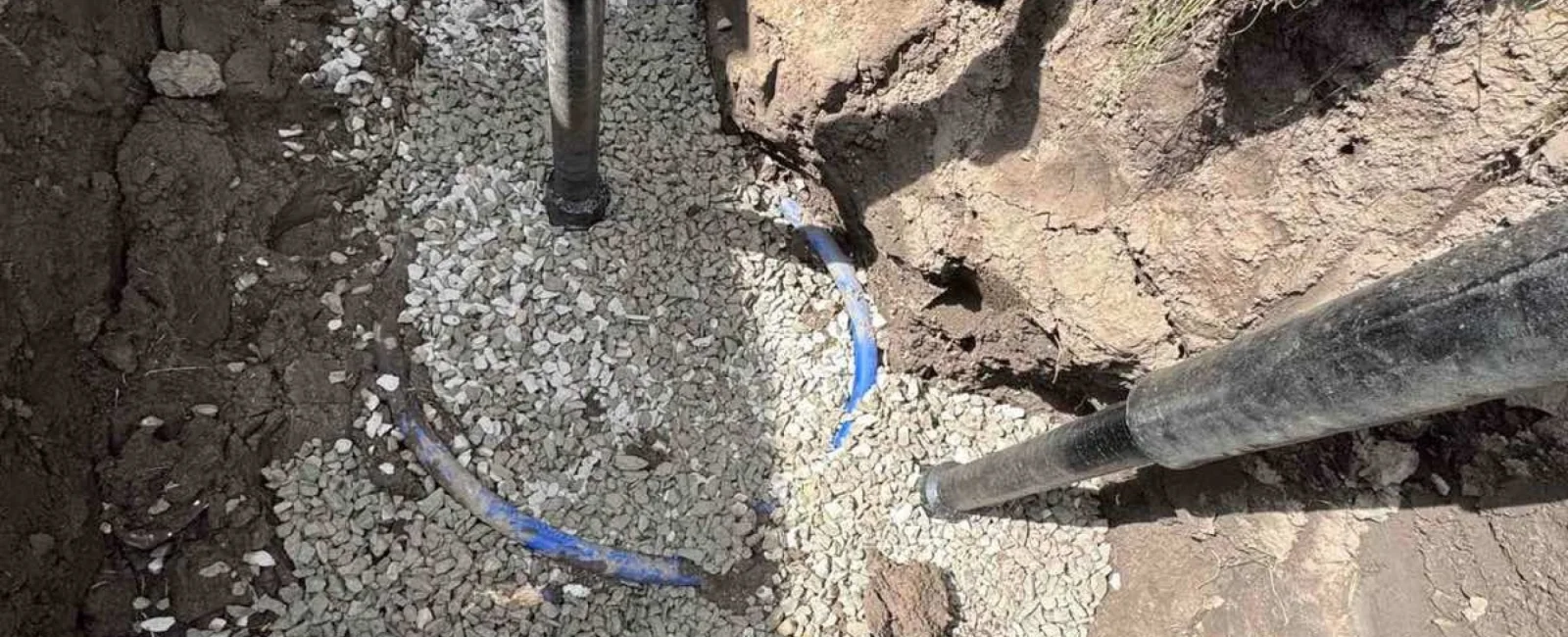
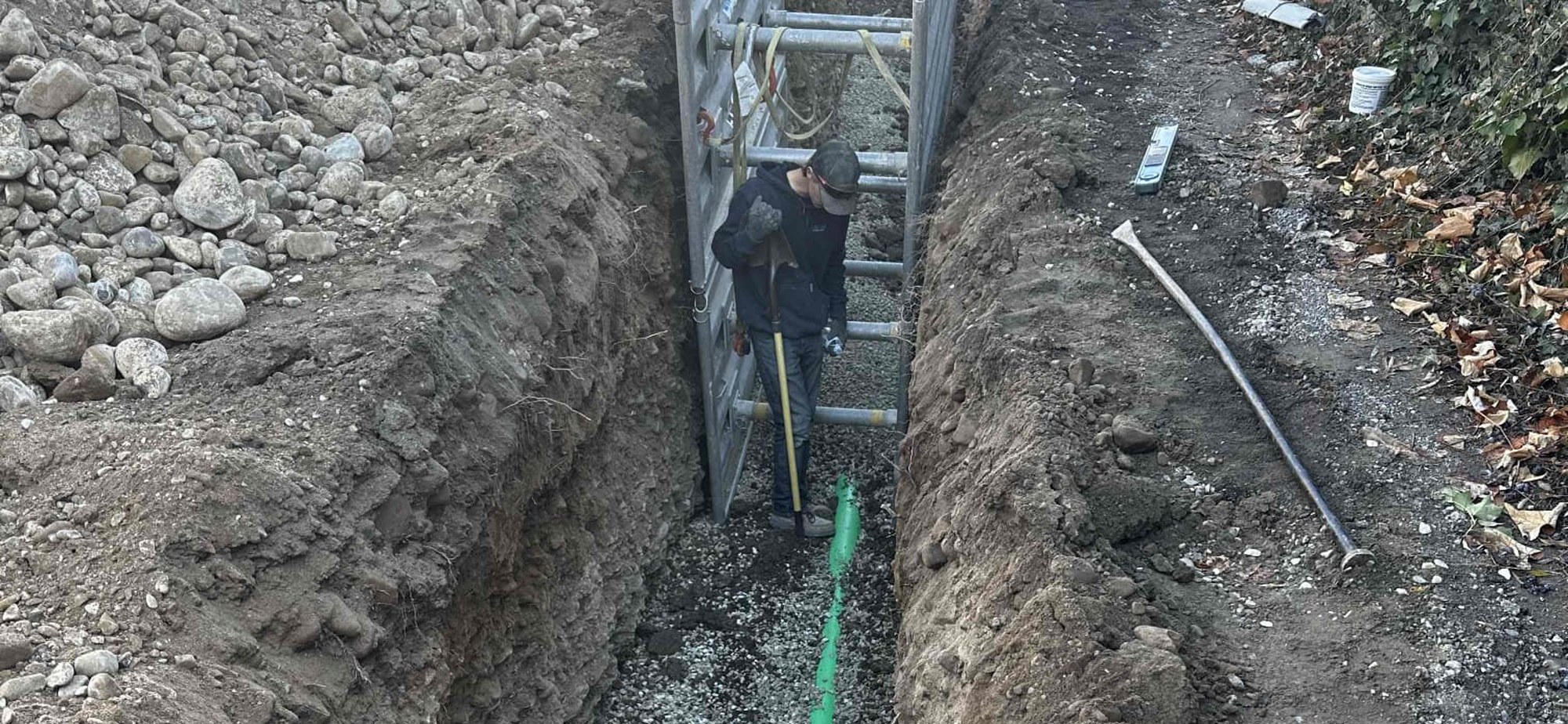
The main sewer line failed right where the cast iron leaving the house met the old asbestos concrete pipe running out to the street. That transition is a common failure point in older Utah neighborhoods, and it is not something you patch from inside. We opened a trench roughly ten feet long, three feet wide, and seven feet deep to expose the joint, cut out the failed section, and tied the new pipe back in. Seven feet is normal here. Our laterals run below the frost line.
Trenchless first, when trenchless actually fits
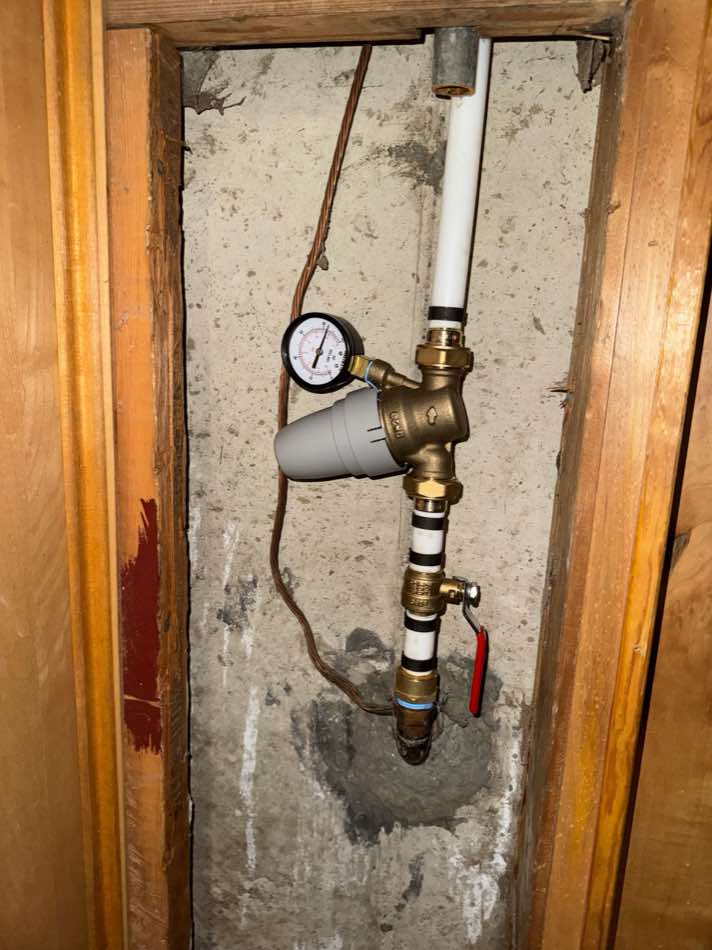
This matters enough to say plainly. When a sewer line can be relined or repaired from the inside, that is almost always the better call: less disruption, less restoration, less cost to you. We do that work and we recommend it whenever the pipe will take it. It does not always take it. A line that has fully collapsed, a section that has separated at the joint, a pipe with a belly holding standing water, an Orangeburg lateral that has gone soft, or a break directly under a foundation footing are all conditions where lining is either impossible or a temporary answer to a permanent problem. A camera inspection tells us which situation you are in before anyone quotes a dig. That is the order of operations: look, then decide, then dig only if digging is the right fix.

What we excavate for
Collapsed or broken sewer laterals. Main water line replacements where the old service line from the meter to the house has rusted through, pinched, or burst. Gas line runs and repairs. Failed or root-crushed sections of the drain line under a driveway or lawn. Access to a sewer repair point that the cleanout cannot reach. Occasionally a new line for an addition or a detached structure.
Digging in Utah is its own problem
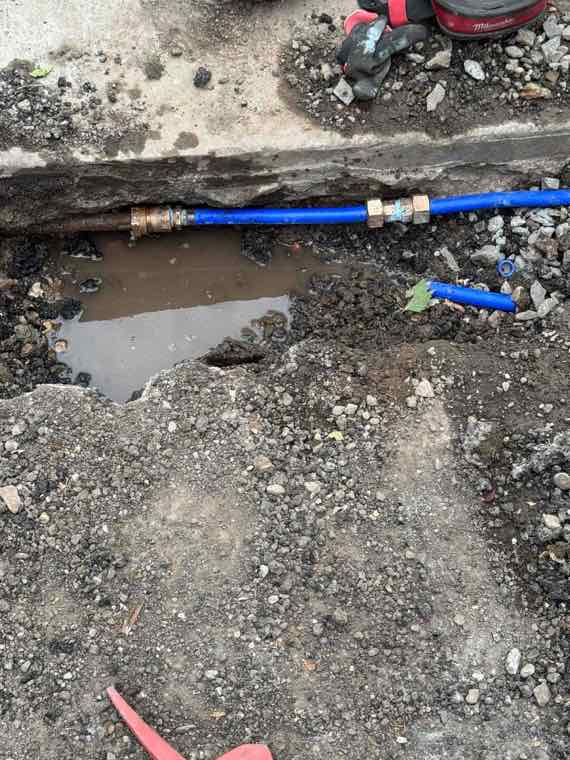
Our sewer laterals sit around eight feet down, below the frost line. That depth is why a leaking line here does not show up as a soggy patch in the lawn the way it does in warmer states, and it is also why a Utah trench is a real excavation rather than a shovel and an afternoon. Depth means shoring, means spoil piles, and means the job takes the time it takes. Older neighborhoods along the Wasatch Front run clay and cast iron laterals with joints every few feet, and roots find every one of them. Rocky soil in the benches is hard on equipment and hard on pipe. In winter the top of the ground is frozen and the work is slower. Every dig starts with utility locates through Blue Stakes of Utah, because the one thing more expensive than an excavation is an excavation that hits a gas line.

What to expect, including the ugly parts
Here is the honest version. An excavation is disruptive. There will be equipment on your property, a pile of dirt, and a section of lawn, driveway, or concrete that has to come up to reach the pipe. Grass does not come back looking untouched, and anybody who tells you otherwise has not done many of these. What you get from us is straight information before it starts. Before we break ground you will know where the trench is going, how long the work should take, whether the water or sewer will be off and for how long, what permits and inspections your city requires, and exactly what restoration is and is not included in your quote. We backfill and compact the trench. Anything beyond that, new sod, replacement concrete, sprinkler repairs, gets spelled out in writing up front so there is no argument at the end. We are plumbers, not a landscaping company, and we would rather tell you that on day one.
Explore More Rare Breed Services:
Homes Served
Certified
Experts in System Performance
We Call It A STEPP.
Our Customers Just Call It Different.
Long before we pick up a tool, we pick up the phone. You call. We listen. Every job is measured against six standards: Accountability, Safety, Trust, Excellence, Progress, and Positivity. Here is what that looks like from your side of the door.
Accountability
We Own the Outcome.
If it is ours to do, we do it well. If it is ours to fix, we make it right. No blame, no corner-cutting, no excuses. That is how trust gets built, one job at a time.
Safety
No Shortcuts. Ever.
Safety sits at the heart of every decision we make. Every job we do keeps your family safe, your home protected, and our crew going home in one piece.

Trust
Earned by Showing Up.
It is rare to find a contractor you can trust completely, with your home, your family, and your friends. We earn it through actions, not promises, every single visit.

Excellence
Good Enough Is Never Good Enough.
We do the job right the first time, every time. The highest standard of skill and craftsmanship is the minimum standard here.

Progress & Positivity
Better Every Job. Positive at Every Door.
Complacency is the enemy of greatness, so we train, learn, and evolve every week. And we do it with optimism, turning problems into opportunities and lifting the people around us. You will feel it at the door.
The Kind of Service People Talk About.
We built Rare Breed to feel different, and it turns out, people noticed. These are their words. Their stories. What it’s like to be cared for by a team that shows up with purpose, listens with respect, and follows through with heart. The kind of experience that stays with you, long after the work is done.