Not every drain problem is a clog, and not every drain problem is the sewer line. Plenty of them live in the pipe between a fixture and the floor: a cracked fitting behind drywall, a stack that has rusted through, a kitchen line that was never run at the right slope, a laundry drain that backs up because the cast iron feeding it has closed down to the width of a pencil.
This page is about the drain lines inside your house. Everything from the foundation out to the city main is sewer line repair, and it is a different job with different tools.
Damp carpet at the bottom of the stairs
A customer called about damp carpet at the bottom of the stairs. Nothing upstairs looked wrong and no fixture nearby was leaking. What we found was the main stack running behind the wall above the stairs, cracked at the hub just above the cleanout. Every fixture on the floors above was draining into that crack, a little at a time, and the water was travelling down inside the wall before it reached the carpet. The wet spot was nowhere near the broken pipe. That is normal for interior drain failures, and it is the reason we chase the source rather than the stain.
What we work on inside the house
Branch lines running from sinks, tubs, showers, toilets and laundry back to the stack. The stacks themselves. Vents, which are the half of the system nobody thinks about until a drain starts gurgling or a trap siphons dry and the room smells. Cleanout access, which older homes are often missing entirely, and which turns every future problem into a bigger job.
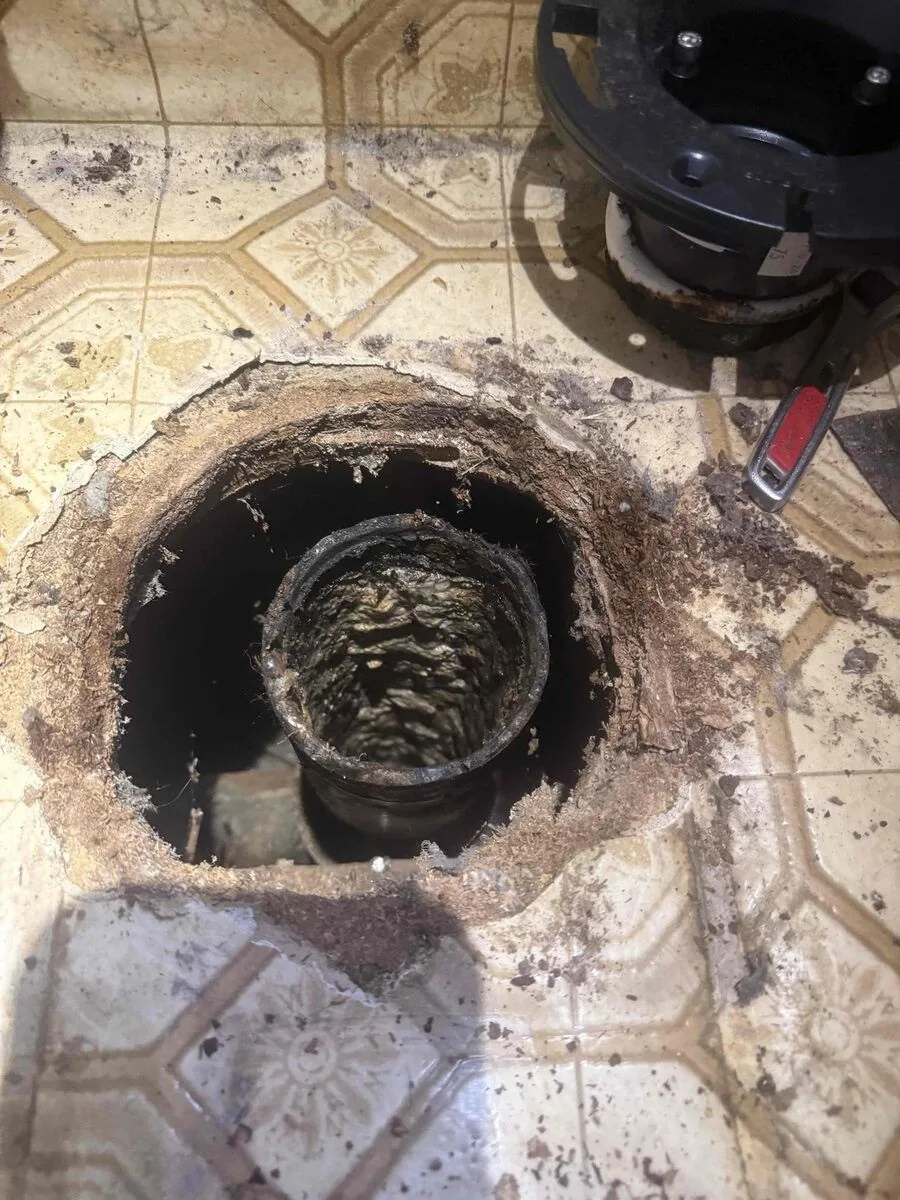
The pipe we replace most is cast iron and galvanized. Both fail from the inside out, so the outside can look fine while the bore has scaled down to a fraction of its original diameter. A washer drain backing up into the laundry room, with an auger that will not fix it, is usually that: the cable clears the blockage and the pipe is still too narrow to carry a full load of water.
Where our work stops and the sewer line starts
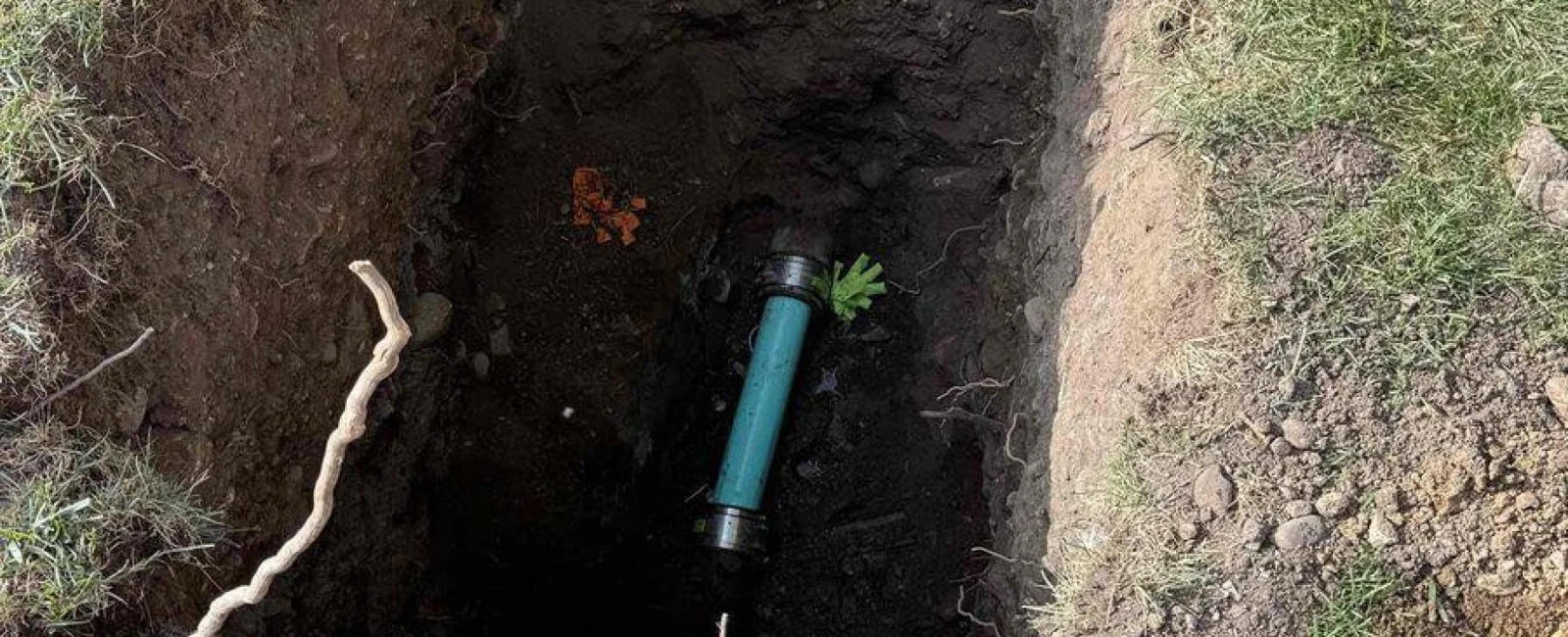
Roughly at the foundation. Inside that line it is interior drain work, which usually means opening a wall or a ceiling, cutting out a section, and repiping it in ABS. Outside it, the line is buried several feet down and heading for the city main, and the answers are a spot repair, a liner or a replacement.
Knowing which side of the wall your problem is on changes the price by an order of magnitude, so we work that out before quoting anything. If several fixtures are misbehaving at once, or a floor drain backs up when something upstairs runs, that points outside and belongs on the sewer line repair side. One fixture, or fixtures grouped on one wall, usually points inside.
One myth worth clearing up, because it appears on almost every plumbing site written for warmer states: a soggy patch in the lawn is not a reliable Utah signal. Our lines sit well below the frost line. Trust the drains, not the grass.
When replacing old pipe is actually worth it
Not always, and we will say so. A single cracked fitting in an otherwise sound ABS system is a section repair, not a repipe. We have cut out a cracked forty five, replaced six inches of pipe, and left the rest alone because the rest was fine.
The case for replacing a run is when the material itself is done. Cast iron and galvanized reach a point where every clear is temporary, and you are paying for a drain cleaning two or three times a year on a pipe that is never going to flow properly again. When the walls or the crawl space are already open for other work, that arithmetic changes quickly, because access is most of the cost.
Remodels, and the parts that fail inspection
Most of the interior drain work we do is tied to a remodel. Moving a sink, adding a bathroom, or finishing a basement means the drain has to move too, and three things decide whether it passes: slope, venting, and pipe size.
Those are also the three things we most often find wrong in work somebody else did. A kitchen drain run too high so the slope is flat. A line teed in with no vent. A one and a half inch branch that needed to be two inch once extra fixtures were added to it. Adding fixtures to an existing line is where sizing quietly becomes the whole job, and it is worth catching on paper rather than after the drywall is up. If your project is a kitchen, that is the most common place we get called mid-remodel.
What we do not do
We do not locate slab or underground leaks. That takes specialized listening and tracing equipment we do not own, and we will not bill you to guess at it. If the trail leads under the slab rather than into a drain line we can open up, we say so and point you to someone who does that work. Our leak repair page draws that line in detail.
What our customers say
Rare Breed carries 1,711 reviews at 4.9 stars across our three Northern Utah locations. Quoted word for word from our public review pages, click through and check us:
“He was the only plumber that didn’t tell me they were two weeks out. I definitely appreciate his responsiveness and quality.”
Joe H. · Google review
Fast, Friendly, Fair
We schedule a 2-hour arrival window and we keep it, because sitting home all day waiting on a plumber is not respect for your time. Interior drain work means opening walls and floors in a house somebody lives in, so floor protection and cleanup are part of the job, not a favor. That is the A STEPP standard our whole team is held to: Accountability, Safety, Trust, Excellence, Progress, Positivity.
Rare Breed Plumbing, Heating, and Air
Sandy: 8763 Sandy Pkwy, Sandy, UT 84070
Bountiful: 270 S Main St. Suite #113, Bountiful, UT 84010
Orem: 1197 S 1480 W, Orem, UT 84058
Mon-Fri 8am-5pm, 24/7 emergency service
Call 385-449-0144 or book online.
Drain repair questions we hear a lot
How do I know if it is inside the house or the sewer line?
Count the fixtures. One sink or one tub misbehaving is usually a branch line inside. Several fixtures at once, or a basement floor drain backing up when someone showers upstairs, means everything is trying to leave through the same restricted pipe further out, which is sewer line territory.
Do you have to cut into my wall?
Sometimes, and we will tell you before we start rather than after. Interior drain lines run behind drywall and under floors, so reaching a cracked fitting often means opening a section. We keep the opening as small as the repair allows.
My drain was just cleared and it is already slow again.
Then the clog was a symptom, not the problem. A pipe that closes back up quickly is usually scaled cast iron, a flat run with no slope, or a missing vent. Clearing it again buys the same few weeks. Finding out which of the three it is costs less than the third cleaning.
Can you replace drains while my basement is already open?
That is the best time to do it. Access is most of the cost on interior drain work, so replacing aging cast iron or galvanized while the walls are already open is far cheaper than coming back to it later.