
How to Winterize Your Pipes in Utah
Utah winters vary by elevation and location, but they all share one characteristic: temperatures that get cold enough to freeze exposed pipes. And a frozen pipe doesn’t just stop your water flow. It can burst, sending water into your walls, floors, and foundation before you even realize what happened.
The good news is that winterizing your plumbing is mostly preventive work you can do yourself, and it takes a few hours at most. Do it before the first hard freeze and you can stop worrying about it until spring.
On this page
- Understand Which Pipes Are at Risk
- Step 1: Shut Off and Drain Outdoor Hose Bibs
- Step 2: Insulate Exposed Pipes
- Step 3: Drain and Blow Out Your Irrigation System
- Step 4: Know Where Your Main Shutoff Is
- Step 5: Keep Interior Temperatures Consistent
- Step 6: Protect Pipes During Extended Cold Snaps
- If a Pipe Does Freeze
Understand Which Pipes Are at Risk
Not all pipes freeze equally. The ones you need to worry about are the ones exposed to cold temperatures without adequate insulation:
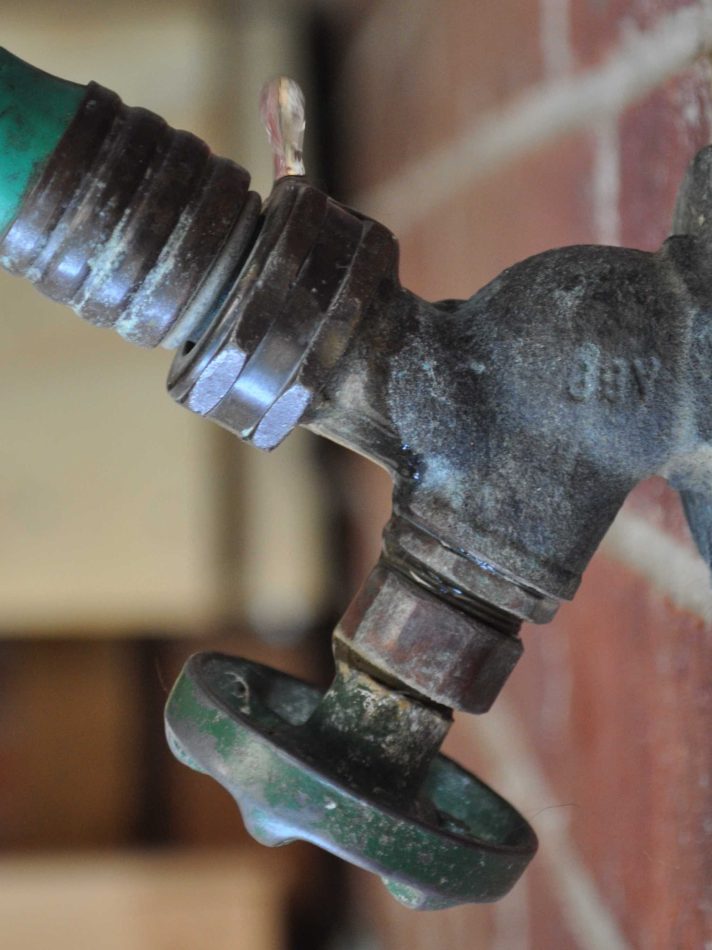
Exterior hose bibs (outdoor spigots). These are the most commonly forgotten. Any water left in the pipe feeding an outdoor spigot will freeze when temperatures drop below 32 degrees.
Pipes in unheated or poorly insulated spaces. This includes garage walls, crawl spaces, attics, and exterior-facing walls where the insulation is thin or missing. If you can feel a draft near a wall, the pipes in that wall are vulnerable.
Pipes in cabinets against exterior walls. Under-sink cabinets on exterior walls, especially in kitchens and bathrooms on the cold side of the house, can get cold enough to freeze supply lines if cabinet doors are kept closed during extreme cold.
Irrigation and sprinkler systems. Any water left in underground lines when the ground freezes can expand and crack fittings or pipes.
Step 1: Shut Off and Drain Outdoor Hose Bibs
Most Utah homes built in the last few decades have frost-free hose bibs, which are designed to prevent freezing by shutting off water inside the heated wall rather than at the exterior valve. If yours are frost-free, the main step is to disconnect your garden hoses before winter. Leaving a hose attached holds water at the exterior valve and defeats the frost-free design.
If your home has older hose bibs that are not frost-free, you’ll need to shut off the interior valve feeding each one (usually in the basement or crawl space below each spigot), then open the exterior valve to drain any remaining water from the pipe. Leave the exterior valve open through the winter.
Not sure whether your hose bibs are frost-free? Turn on the water at the exterior valve and then shut it off. If water continues to drip for a few seconds after closing, it’s draining from inside the wall, which is the frost-free mechanism. If it stops immediately, the valve is at the exterior and you have an older bib.
Step 2: Insulate Exposed Pipes
Foam pipe insulation is inexpensive, available at any hardware store, and takes minutes to install. It comes in split tubes sized to fit standard pipe diameters. You peel it open, wrap it around the pipe, and press it closed.
Any pipe in an unheated space is a candidate for insulation: crawl spaces, garage walls, exposed pipes in the basement, pipes in attic areas. Pay particular attention to pipes on exterior-facing walls where you can feel cold air nearby.
For added protection in areas that get very cold, you can layer heat tape (also called pipe heating cable) under the foam insulation. Heat tape is an electric cable that warms the pipe directly and is controlled by a built-in thermostat. Use it for pipes in especially vulnerable spots or in areas where insulation alone isn’t enough.
Step 3: Drain and Blow Out Your Irrigation System
Sprinkler and drip irrigation systems need to be fully drained before the ground freezes. Most systems have a manual drain valve at the lowest point. Open it and let gravity drain what it can. For any water remaining in the lines, a compressor blow-out, using compressed air to push water out of every zone, is the most thorough method.
Many Utah homeowners hire an irrigation company to do the blowout, which is a quick and inexpensive service. To be straight with you, sprinkler blowouts are not something we do. We are a plumbing, heating, and air company, and irrigation is its own trade with its own compressors. What we do handle is everything on the house side of that line: the hose bibbs and outdoor faucets, the stop and waste valve that isolates the irrigation line from your house, and the interior shutoffs feeding both. If you have a complex system with multiple zones, professional blow-out is worth the modest cost to make sure every line is clear.
Step 4: Know Where Your Main Shutoff Is
If a pipe does freeze and burst during the winter, the first thing you need to do is shut off the water. Make sure every adult in your household knows where the main shutoff is and how to operate it before you need it. If yours is buried in the yard and nobody can find it, that is the stop and waste valve, and locating it is a job worth doing on a warm day rather than a frozen one. I cannot stress that one enough. The middle of a freezing night, with water already coming through the ceiling, is the worst possible time to learn where your valve is.
If you’re leaving town for any extended period during winter, especially over the holidays, consider turning the main water off and draining the system rather than leaving it pressurized in an empty house.
Step 5: Keep Interior Temperatures Consistent
If you’re at home, keeping your thermostat at a consistent temperature rather than letting it drop significantly overnight reduces the risk of pipes in interior walls getting cold enough to freeze. The general recommendation is not to set your thermostat below 55 degrees, even when you’re away.
For under-sink cabinets on exterior walls, leaving the cabinet doors open during extreme cold nights allows warm room air to circulate around the pipes.
Step 6: Protect Pipes During Extended Cold Snaps
Utah occasionally sees stretches of sustained cold, where overnight lows stay well below zero for several consecutive nights. During these periods, even pipes that are normally fine need extra attention.
Keep your garage door closed as much as possible if you have water supply lines running through the garage wall. The temperature inside an open garage can drop to within a few degrees of the outside overnight.
Open cabinet doors under sinks on exterior walls before bed on nights when temperatures are forecast to drop below 10 or 15 degrees. Warm air from the room circulates around the pipes and keeps them above freezing even when the wall behind them gets cold.
Let one or two faucets on exterior walls drip slowly overnight during the coldest stretches. Moving water takes significantly longer to freeze than still water. The faucets don’t need to run hard, just a slow, steady drip is enough.
These steps feel overly cautious in a normal Utah winter. During an unusual cold snap, they’re the difference between a normal morning and an emergency call.
If a Pipe Does Freeze
A frozen pipe doesn’t always burst immediately. If you turn on a faucet and get little to no water, and temperatures have been below freezing, you likely have a frozen pipe somewhere in the system.
Don’t try to thaw it with an open flame. A hair dryer on low heat, warm towels, or a heating pad wrapped around the pipe works safely for accessible pipes. Open the faucet before you start so water can flow as the ice thaws.
If you can’t locate the frozen section, or if you suspect it’s inside a wall, call a plumber. Trying to thaw an inaccessible pipe incorrectly can cause a burst that floods the wall cavity.
At Rare Breed Plumbing, Heating, and Air, we run emergency plumbing service 24/7 across Salt Lake, Davis, Utah, Weber, Summit, Tooele, Wasatch, Cache, and Box Elder counties, so a burst at 2am gets a live person, not a voicemail. Call 385-449-0144 and we will walk you through the shutoff on the phone while a truck is on the way. If nothing is leaking yet and you just want the pipes looked at before the next freeze, book online. Either way you get a 3-hour appointment window rather than a vague all-day promise.
FAQ
Which pipes freeze first in a Utah winter?
Outdoor hose bibs, pipes in garages, crawl spaces, attics, and thin exterior walls, plus under-sink lines in cabinets on the cold side of the house. Water left in a hose bib line freezes below 32 degrees.
How do I winterize outdoor faucets?
Disconnect garden hoses so a frost-free bib can drain back into the wall. On an older bib, shut the interior valve, open the exterior faucet, and leave it open through winter.
How warm should I keep the house if I leave town?
Do not set the thermostat below 55 degrees, even when you are away. On extreme nights, leave under-sink cabinet doors open on exterior walls so room air can reach the pipes.
What if a pipe does freeze?
Know the main shutoff before you need it. If a pipe bursts, shutting the water off is the first move. This article is the preventive list: bibs, insulation, irrigation isolation on the house side, and steady indoor heat.
Related: Emergency Plumbing | Repiping Services | Water Line Repair
Related Reading
Related Articles
How We Quote Commercial Plumbing in Utah
By Court Lundberg A commercial quote that is only a phone number and a shrug…
[ READ MORE ]

Does Your Utah Home Need Balanced Ventilation?
By Court Lundberg A tight house keeps the heat you paid for. It also keeps…
[ READ MORE ]

Filtration Sized to Your HVAC System
By Court Lundberg “Filtration sized to your system” is not a catalog upgrade. It is…
[ READ MORE ]