
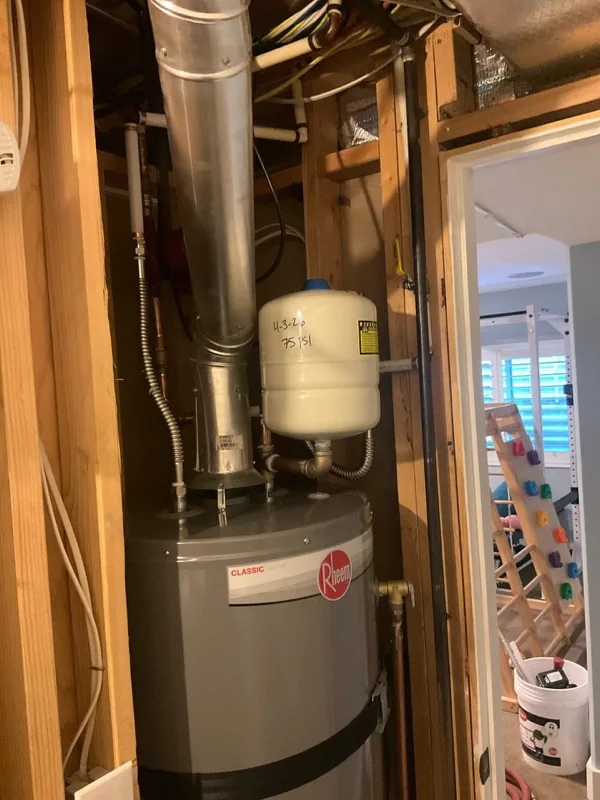
How Long Should a Water Heater Last in Utah?
The standard answer to how long a water heater lasts is 8 to 12 years for a tank unit and 20 years for a tankless. Those numbers come from manufacturers and assume average conditions. In Utah, conditions are not average, and the real answer is more complicated.
Hard water is the single biggest variable in water heater lifespan, and Utah has the hardest water per capita in the entire nation. The high mineral content in our water bakes into scale every time the tank heats, that scale buildup makes the unit work harder, and a unit that works harder dies younger. Understanding how that plays out and what you can do about it is the difference between replacing a water heater on your schedule and replacing it on an emergency basis.
On this page
- What “Normal” Lifespan Actually Means
- How to Know Where Your Unit Stands
- What Extends Lifespan
- When Repair vs. Replacement Makes Sense
- Electric vs. Gas: Does It Change the Lifespan?
- What a Planned Replacement Looks Like vs. an Emergency
What “Normal” Lifespan Actually Means
A water heater rated for a 10 to 12 year lifespan earns that rating under controlled conditions with water of average hardness and consistent maintenance. Most Utah homeowners don’t have either of those.
Utah water is not one number. Across our service area homes run roughly 8 to 29 grains per gallon, and it moves with the season, not just the city. Court’s own house in Herriman hits about 40 grains in summer off the wells and drops to about 20 in winter when the source changes, while Draper runs roughly a third of that summer figure. For context, the scale that qualifies as “very hard” starts at 180 ppm, about 10.5 grains. A water heater operating in very hard water without any softening or treatment is working against conditions the manufacturer’s lifespan rating doesn’t fully account for.
In practice, this means tank water heaters in hard water Utah homes without treatment often reach the end of their useful life at 7 to 9 years rather than 10 to 12. It’s not unusual to see early failures at 6 years in homes with particularly hard water and no maintenance history.
Tankless heaters are more sensitive. The scale that builds in a tankless unit’s heat exchanger restricts water flow and causes the unit to run hotter and harder. Without regular descaling or upstream water softening, a tankless unit in a Utah hard water area can show significant performance degradation within 3 to 5 years and may require heat exchanger replacement well before the 20-year mark.
How to Know Where Your Unit Stands
Age is the starting point. Look at the serial number label on your water heater. Most manufacturers encode the manufacture date into the first characters of the serial number. A quick search for your brand’s serial number format will tell you how to read it. If your unit is within a few years of the expected end of its lifespan, it’s worth knowing now rather than being surprised later.
Beyond age, performance tells you a lot. A water heater showing any of these signs is telling you it’s working harder than it should, regardless of age:
- Running out of hot water faster than it used to
- Making rumbling, popping, or cracking sounds during heating
- Taking longer than usual to recover between uses
- Producing slightly rusty or discolored hot water
- Higher energy bills without any change in usage
Any one of these symptoms in a unit that’s 8 or more years old is a signal to have it assessed before it fails outright.
What Extends Lifespan
Water softening. Installing a whole-home water softener upstream of the water heater is the single most effective thing you can do to protect a tank heater and extend its lifespan in Utah. Soft water doesn’t deposit scale at the bottom of the tank, which means the heating element stays efficient, the tank wall stays protected, and the unit reaches its rated lifespan rather than falling short of it.
Annual flushing. Flush your water heater every year. Almost nobody does, and it’s the cheapest insurance you can buy for the unit. Flushing removes sediment before it hardens into a permanent scale layer. On a tank it’s a DIY-accessible task: connect a hose to the drain valve at the base of the tank, run it to a floor drain or outside, turn off the cold supply, and let it drain. If you have a tankless, the yearly service matters even more, because the heat exchanger scales up faster than a tank and a descale is what keeps it running at full output. The cost of skipping this isn’t the flush itself, it’s years off the unit’s life. In a high-hardness Utah home, the difference between a unit that lasts 7 years and one that reaches 11 is often whether sediment was managed or left to accumulate. For older tanks, or tanks that have never been flushed, the sediment may have already hardened into scale, in which case flushing has limited effect and a professional assessment is the better call.
Anode rod replacement. The anode rod inside your water heater is a sacrificial metal rod designed to corrode so the tank doesn’t. As it depletes, the tank itself begins to corrode. Replace the anode rod every 3 years in water this hard. That one part is all that stands between the water and the steel tank, and once it is used up the tank itself starts to go. In softened households anode rods can deplete faster still, because soft water is slightly more aggressive toward metal, so stay on the same 3-year cycle and be ready to replace it sooner.
Professional maintenance. Having a plumber flush and inspect your water heater periodically, checking the anode rod, testing the pressure relief valve, and inspecting for signs of early corrosion, catches problems before they shorten the unit’s life.
When Repair vs. Replacement Makes Sense
If your water heater is under 6 years old and experiencing a problem, repair usually makes sense. Thermostats, heating elements, pressure relief valves, and anode rods are all replaceable components and can restore normal performance at a fraction of replacement cost.
If your unit is 8 years or older and has a problem, the calculus shifts. Repair costs for a unit near the end of its life often don’t make sense compared to the cost of a planned replacement. You’re paying to extend the life of something that’s going to need replacing soon regardless, and an older unit can fail again from a different component within a year of a repair.
The exception is when the repair is minor (a $50 thermostat on a 9-year-old unit that’s otherwise in good shape) and the unit has been well maintained. Use judgment, and ask your plumber for their honest read.
Electric vs. Gas: Does It Change the Lifespan?
Gas and electric water heaters have similar lifespans in Utah, generally in the same 8 to 12 year range for tank units. The fuel source matters more for operating cost and recovery rate than for longevity.
One notable difference: electric units with immersion heating elements are susceptible to scale buildup directly on the element, since the element sits submerged in the hard water. Scale on the element acts as insulation, causing the element to run hotter and fail earlier. In hard water areas, electric elements in untreated water can fail noticeably sooner than in softened water homes.
Gas units heat the tank from below through the combustion chamber, so the element itself doesn’t touch the water, but sediment still accumulates at the tank floor and affects efficiency in the same way.
What a Planned Replacement Looks Like vs. an Emergency
When a water heater fails unexpectedly, the situation forces your hand. You need hot water, and you need it quickly. Emergency replacements sometimes mean choosing from whatever the plumber has available rather than the model best suited to your home, and the scheduling may not be ideal.
A planned replacement, scheduled when you see the warning signs before failure, gives you time to choose the right unit (tank vs. tankless, correct size, appropriate energy rating), get a proper quote, schedule at a time that’s convenient, and address related work (like adding a water softener) at the same time.
I’ll be honest with you, because I’ve lived this one. I’m a plumber. I know a tank should come out at the 10-year mark, and I tell customers that all day long. My own water heater hit 10 years and I didn’t replace it, because I’m human and life got busy. It failed and started to flood my home. The only reason it wasn’t a disaster is that I had a smart water shut-off installed, and it caught the leak and killed the water before it ran. If it can happen to me, it can happen to anyone. When an aging unit gives you a warning, take it seriously the first time.
Most water heaters give clear warning before they fail outright. Take those warnings seriously when they appear in an aging unit.
At Rare Breed Plumbing, Heating, and Air, we assess water heater condition and help homeowners in Salt Lake and Utah County make the repair vs. replace call with accurate information. Call 385-449-0144 or schedule an appointment for an honest assessment.
FAQ
How long should a water heater last in Utah?
The standard rating is 8 to 12 years for a tank and 20 years for tankless. Those numbers assume average hardness and maintenance. Utah water is not average.
How hard is the water in the service area?
Homes run roughly 8 to 29 grains per gallon, and it moves with the season. Court’s Herriman house hits about 40 grains in summer off the wells and drops to about 20 in winter. Very hard starts at 180 ppm, about 10.5 grains.
How soon do untreated tanks fail here?
Tank heaters in hard-water homes without treatment often reach the end at 7 to 9 years, and early failures at 6 years are not unusual. Tankless can show real degradation in 3 to 5 years without treatment.
What extends a heater’s life?
A whole-home softener upstream of the heater is the single most effective step this article names. Flushing and catching problems before the unit is 8 or more years old also matter.
Related: Water Heater Services | Water Softeners | Tank vs. Tankless Water Heaters: What Utah Homeowners Should Know
Related Reading
Related Articles
How We Quote Commercial Plumbing in Utah
By Court Lundberg A commercial quote that is only a phone number and a shrug…
[ READ MORE ]

Does Your Utah Home Need Balanced Ventilation?
By Court Lundberg A tight house keeps the heat you paid for. It also keeps…
[ READ MORE ]

Filtration Sized to Your HVAC System
By Court Lundberg “Filtration sized to your system” is not a catalog upgrade. It is…
[ READ MORE ]