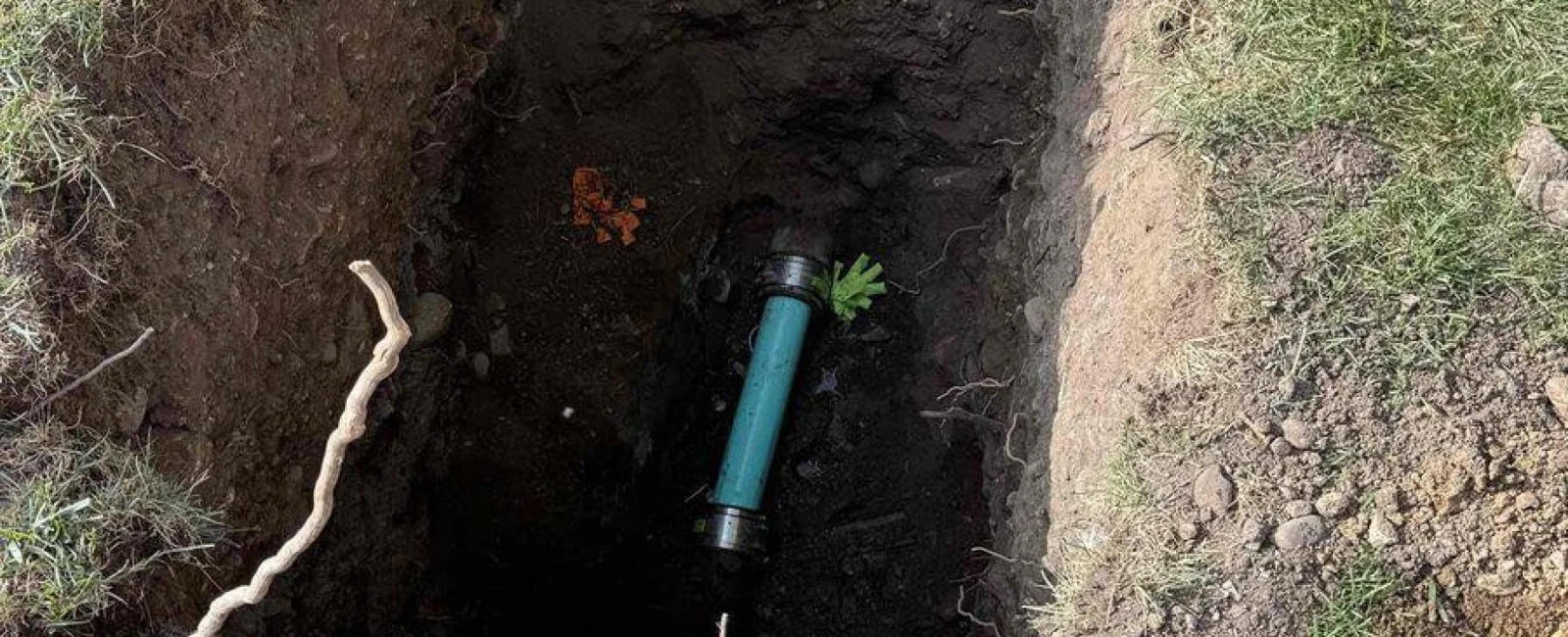
The shower goes to a trickle when somebody starts the laundry. The kitchen faucet used to fill a pot in thirty seconds and now it takes two minutes. Somebody has probably already told you the house is just old. Court’s answer to that: your house is not too old to have good water pressure. Water pressure can always be fixed. From June 2025 through July 2026 our techs ran 56 water pressure jobs across Northern Utah, and most of them ended with a small repair rather than a big one.
Pressure work we actually did this past year
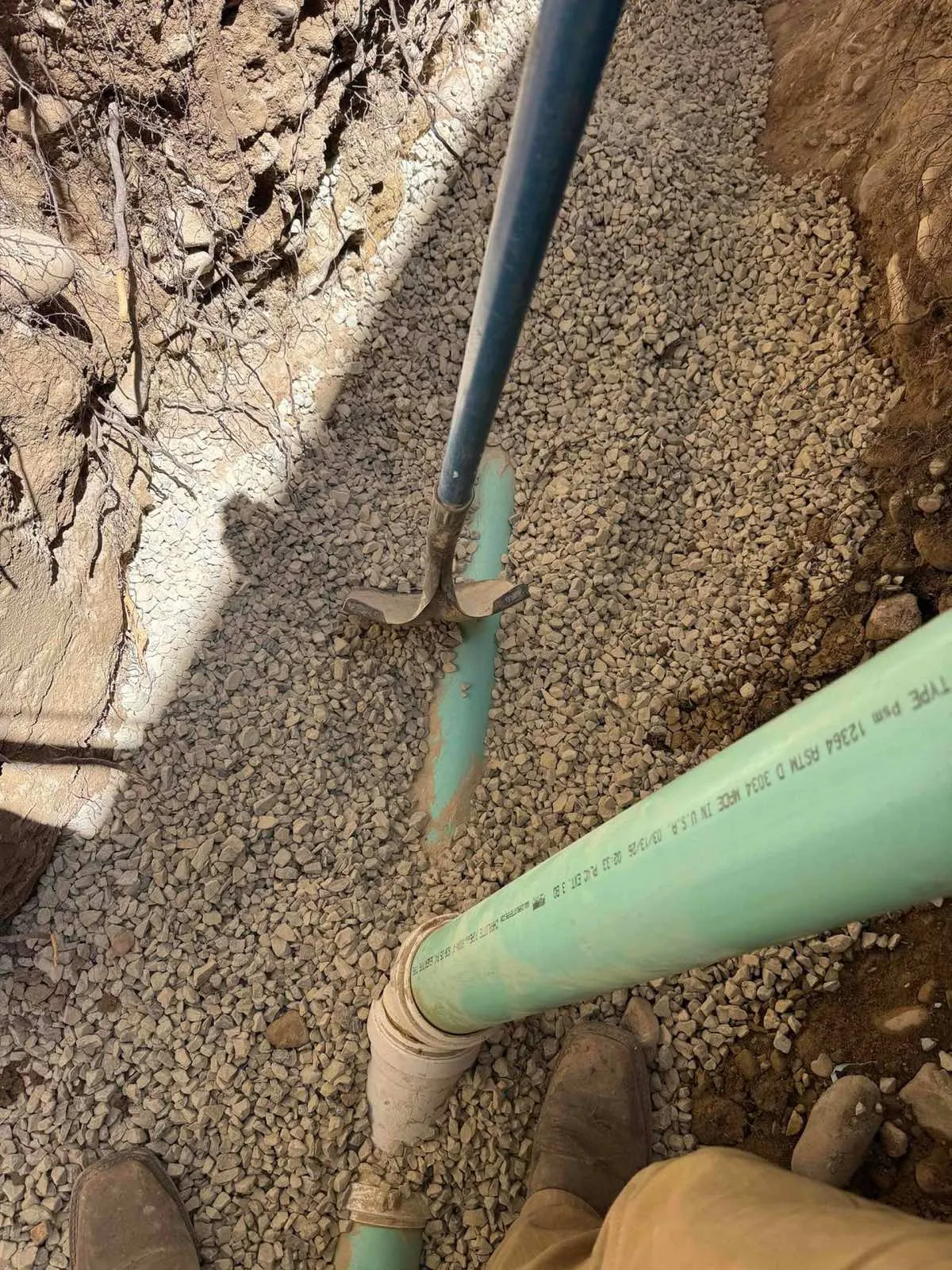
The pressure reducing valve was buried where nobody could get to it, so we moved it to the mechanical room where it can actually be serviced. Then we ran about forty feet of new PEX to give the exterior sprinklers their own dedicated feed, deliberately upstream of the PRV. The house wants regulated pressure. The sprinklers want full city pressure. Those are two different jobs, and one valve cannot do both.
The two questions before anything else
Our plumber will ask you two things before naming a single cause. First, is it one fixture or the whole house? One bad faucet is a different problem than a whole home that has lost pressure. Second, is it only on the hot side, or hot and cold both? Hot only points straight at the water heater and its connections.
You can answer both of those before we get there, and it saves time on the call.
What actually causes it
Running roughly in the order we check them:
The angle stop under the sink, partly closed or failing. The rubber washer inside breaks down over time from the chlorine in the water. Test one yourself: close it all the way and reopen it. If it will not shut the water off completely, it needs to be replaced.
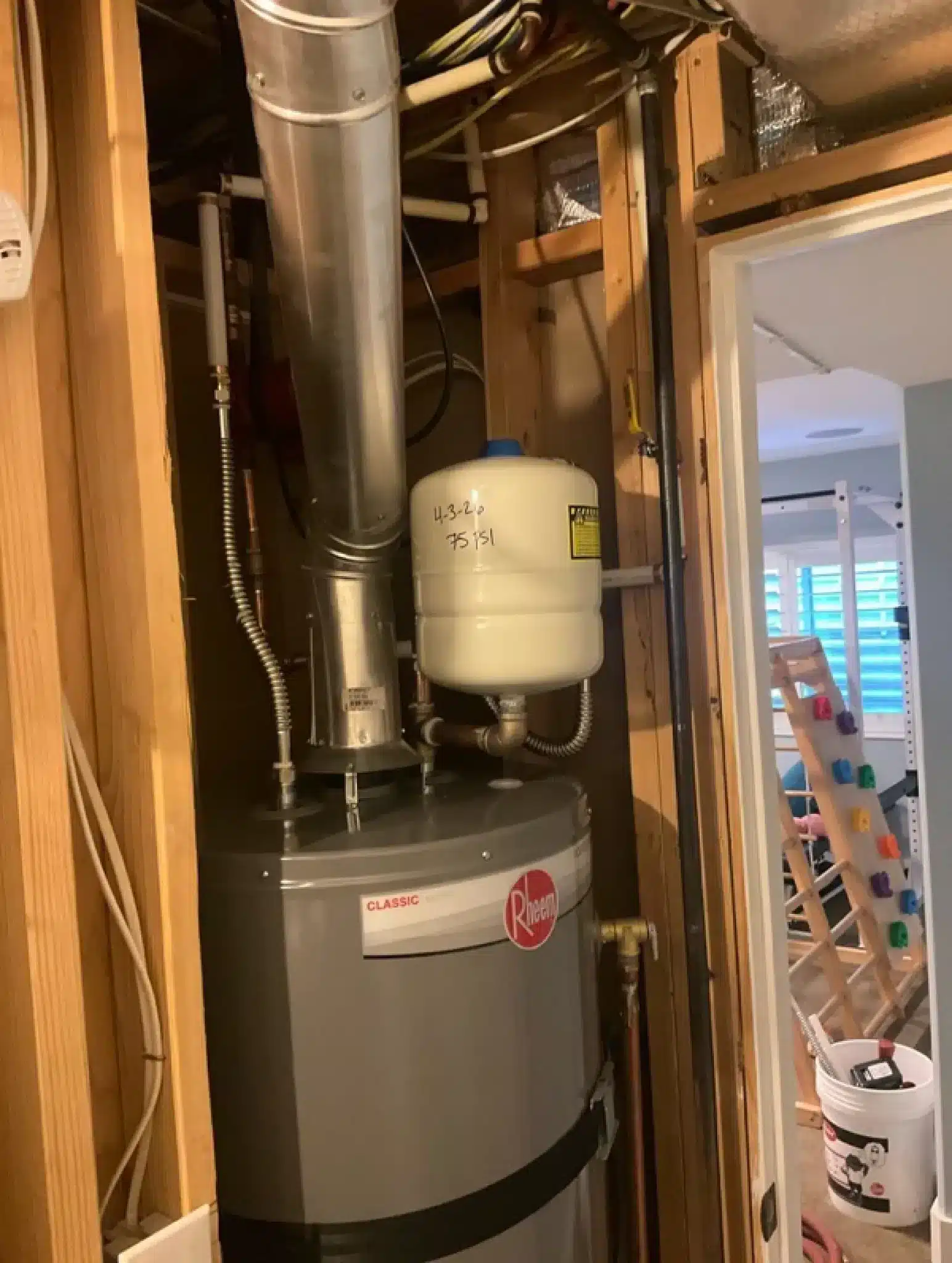
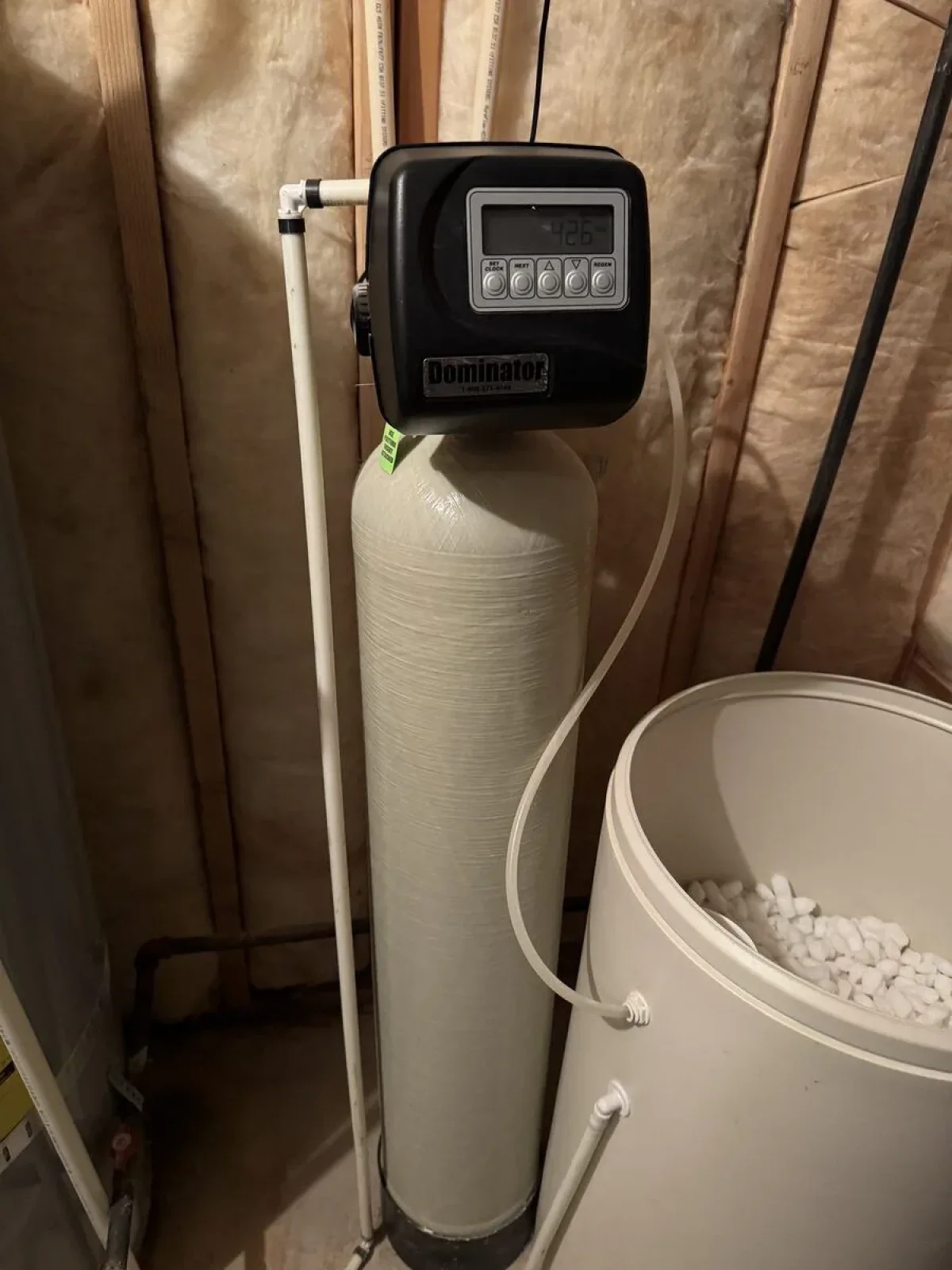
A soft clog or debris in the line. Dielectric unions corroding shut where two dissimilar metals meet, often right at the water heater. The heat trap nipples on top of the water heater scaling closed, which is a hot-side-only clue. A water softener restricting flow, which we test by bypassing it. The pressure reducing valve failing toward restriction. The city side, which is not yours to fix but is worth ruling out. Crushed poly pipe. And galvanized steel pipe, standard before the 1970s, which corrodes and scales from the inside until a one inch pipe is choked down to about the size of a pencil lead.
Too much pressure is its own problem, and homeowners rarely call about it until something bursts. A PRV lasts anywhere from 3 to 15 years depending on quality and it fails two ways: stuck closed, which starves the house, or stuck open, which sends full street pressure into your fixtures and shortens the life of every valve, supply line, and appliance in the building.
We put a gauge on it before we quote anything
You cannot know which of those it is by guessing, so we do not. We read static pressure with no water running, where 50 to 80 psi is normal and anything under 40 points at a valve rather than the whole system. Then we read again with a bathroom faucet running. It should not fall more than about 10 psi off static. A bigger drop than that means a restriction somewhere, and where the number changes as we work through the house tells us where the restriction lives.
This is the part Court will not budge on. A repipe is a real fix for a real condition, and plenty of Utah homes eventually need one. But nobody should be sold a whole home repipe before someone has read a gauge. A failed PRV and a corroded angle stop are common, cheap, and get quoted as repipes far too often.
Where our line is
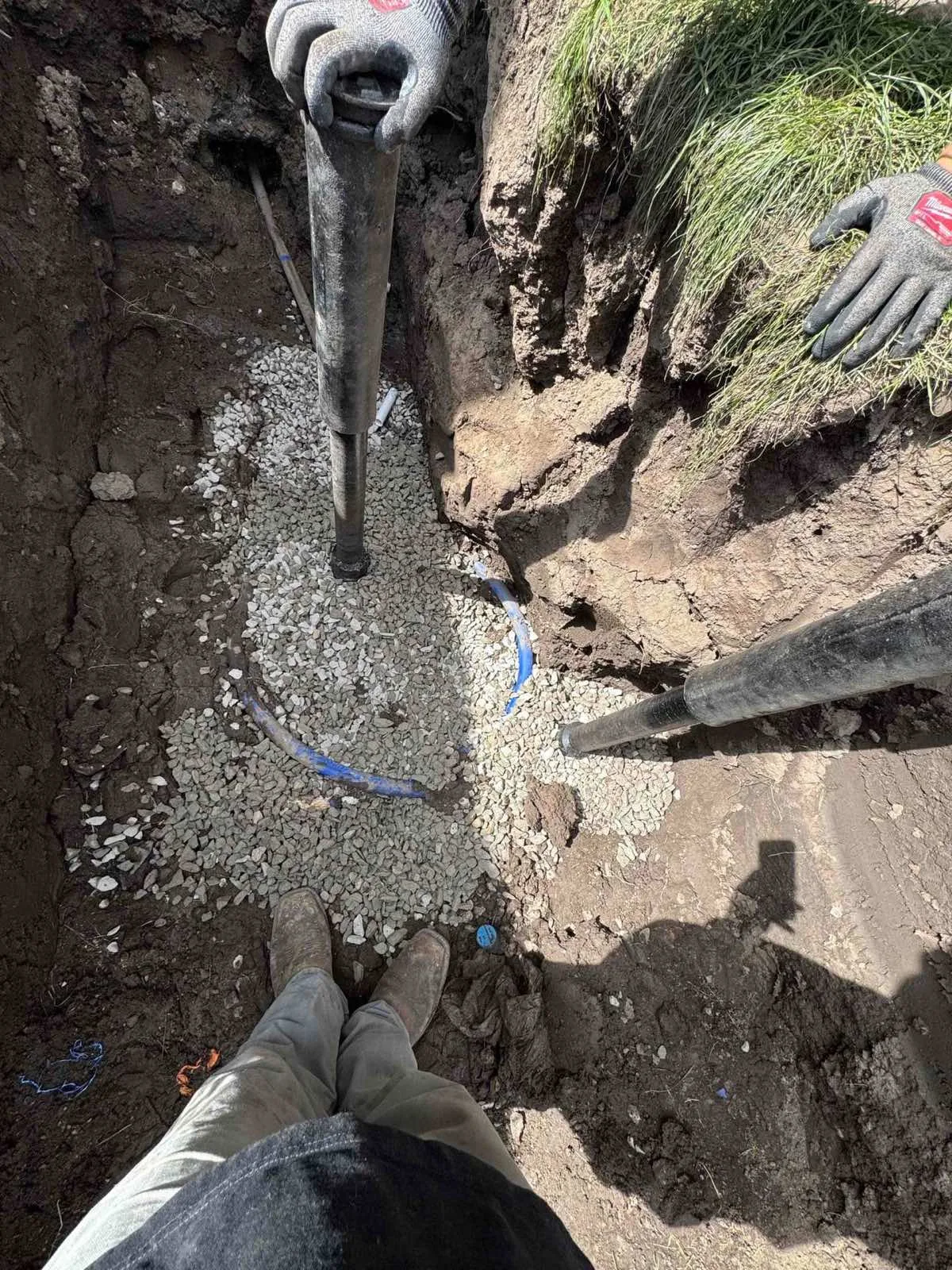
We test, repair, and replace pressure reducing valves, angle stops, supply lines, and restricted piping we can access, and we repair and replace the buried service line running from the meter to the house. Those lines rust under the weight of the soil, get pinched, and eventually leak.
What we do not do is hunt for an unknown underground leak with specialized locating equipment, and we do not claim to. If your pressure problem turns out to be an unlocated leak under a slab or out in the yard, you will hear that from us straight, and we will point you to someone who does that work.
What our customers say
Rare Breed carries 1,712 reviews at 4.9 stars across our three Northern Utah locations. Quoted word for word from our public review pages, click through and check us:
“He was the only plumber that didn’t tell me they were two weeks out. I definitely appreciate his responsiveness and quality.”
Joe H. · Google review
“Fast service. Courteous tech. All around great experience.”
Caleb P. · Facebook review
Fast, Friendly, Fair
We schedule a 2-hour arrival window and we keep it, because sitting home all day waiting on a plumber is not respect for your time. Every job gets done right the first time, no shortcuts. That is the A STEPP standard our whole team is held to: Accountability, Safety, Trust, Excellence, Progress, Positivity.
Rare Breed Plumbing, Heating, and Air
Sandy: 8763 Sandy Pkwy, Sandy, UT 84070
Bountiful: 270 S Main St. Suite #113, Bountiful, UT 84010
Orem: 1197 S 1480 W, Orem, UT 84058
Mon-Fri 8am-5pm, 24/7 emergency service
Call 385-449-0144 or book online.
Water pressure questions we hear a lot
What is normal water pressure?
50 to 80 psi at rest. Under 40 and something is restricting the system. Over 80 and you are wearing out every fixture and appliance in the house faster than you should be.
It is only bad on the hot side. What does that mean?
That narrows it fast. Hot-only pressure loss usually lives at the water heater, either scaled heat trap nipples or a corroded dielectric union at the connections.
Does my water softener cause low pressure?
It can, and it is easy to prove. We bypass the softener and read the gauge again. If the pressure comes back, we know.
Do I need a whole home repipe?
Maybe, and maybe not. Most homeowners assume the fix is the biggest one on the list. It usually is not. We read the gauge first and quote the actual problem.